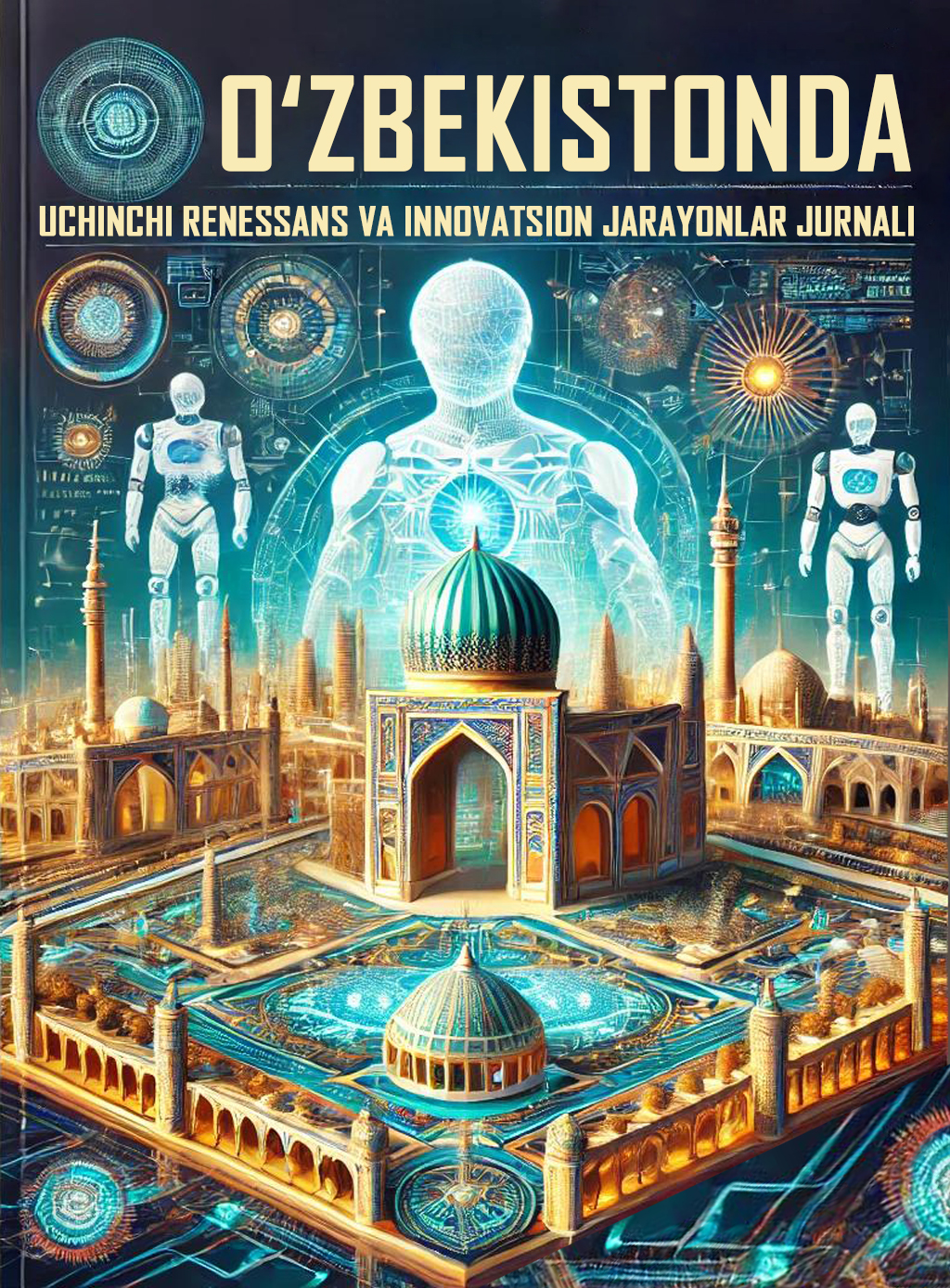
FROM CHALKBOARDS TO ALGORITHMS: THE TRANSFORMATION OF UZBEK EDUCATION
Annotatsiya
Despite the global surge in research on artificial intelligence (AI) in education, the pedagogical implications of AI integration within post-Soviet, nationally distinctive educational systems — such as that of Uzbekistan — remain substantially undertheorized. This article introduces an original conceptual framework, the Multilevel AI-Augmented Pedagogy Model (MAAPM), developed specifically to account for the structural, linguistic, cultural, and institutional characteristics of the Uzbek educational continuum — spanning preschool through higher education. The framework synthesizes three theoretical pillars: Vygotsky’s zone of proximal development (ZPD), Bloom’s revised taxonomy of educational objectives, and the newly proposed Pedagogical AI Mediation Theory (PAIMT). Drawing on the policy architecture of Uzbekistan’sEducation Development Strategy 2030 and Digital Uzbekistan 2030, the article argues that AI’s pedagogical value is not inherent in the technology itself but is constituted through the quality of mediation structures — human, institutional, and algorithmic — that surround it. The MAAPM identifies five original constructs: Adaptive Instructional Scaffolding (AIS), Culturally Responsive AI (CRAI), Multilingual Pedagogical Alignment (MPA), Formative Intelligence Loops (FIL), and Educator Agency Preservation (EAP). Implications for curriculum policy, teacher preparation, and national AI-in-education governance in Uzbekistan are discussed.
Foydalaniladigan adabiyotlar
Anderson, L. W., & Krathwohl, D. R. (Eds.). (2001). A Taxonomy for Learning, Teaching, and Assessing: A Revision of Bloom’s Educational Objectives. Longman.
Cuban, L. (2001). Oversold and Underused: Computers in the Classroom. Harvard University Press.
Engeström, Y. (1987). Learning by Expanding: An Activity-Theoretical Approach to Developmental Research. Orienta-Konsultit.
Gay, G. (2010). Culturally Responsive Teaching: Theory, Research, and Practice (2nd ed.). Teachers College Press.
Hammond, Z. (2014). Culturally Responsive Teaching and the Brain: Promoting Authentic Engagement and Rigor Among Culturally and Linguistically Diverse Students. Corwin.
Ministry of Public Education of Uzbekistan. (2024). Annual Statistical Report on General Secondary Education. Tashkent: Ministry of Public Education.
Ouyang, F., & Jiao, P. (2021). Artificial intelligence in education: The three paradigms. Computers and Education: Artificial Intelligence, 2, 100020. https://doi.org/10.1016/j.caeai.2021.100020
Republic of Uzbekistan. (2022). Presidential Decree No. PP-145: On the Approval of the Strategy for the Development of New Uzbekistan 2022–2026. Official Gazette of Uzbekistan.
Republic of Uzbekistan. (2020). Digital Uzbekistan 2030 Strategy. Ministry of Digital Technologies of the Republic of Uzbekistan.
Selwyn, N. (2019). Should Robots Replace Teachers? AI and the Future of Education. Polity Press.
Silova, I., & Steiner-Khamsi, G. (Eds.). (2008). How Schools Sell Themselves to the World: The Educational Systems of Post-Soviet Countries in the Context of Globalization. Kumarian Press.
Vygotsky, L. S. (1978). Mind in Society: The Development of Higher Psychological Processes. Harvard University Press.
Wiliam, D. (2011). Embedded Formative Assessment. Solution Tree Press.
Zawacki-Richter, O., Marín, V. I., Bond, M., & Gouverneur, F. (2019). Systematic review of research on artificial intelligence applications in higher education: Where are the educators? International Journal of Educational Technology in Higher Education, 16(1), 39. https://doi.org/10.1186/s41239-019-0171-0